Le fonti pubbliche a Collazzone
Il colle e tutto il crinale ove sorge il borgo di Collazzone, e in parte di Piedicolle, è costituito da rocce a bassa permeabilità che favoriscono l’accumulo delle acque piovane al loro interno come rocce serbatoio. Pertanto alla base del crinale erano presenti diverse sorgenti alimentate dagli accumuli idrici sovrastanti che fuoriuscivano all’esterno. In questi luoghi, soprattutto in quelli più vicini al centro abitato, furono costruiti fontane, lavatoi e abbeveratoi pubblici.
La presenza di un pur modesto flusso d’acqua continuo e di varie vasche collegate tra loro, ne permetteva il ricambio, garantendone così igiene e salubrità.
Alla fonte che forniva acqua per bere e cucinare erano spesso affiancati lavatoi per il bucato e abbeveratoi per gli animali. La presenza di tettoie di riparo delle vasche e dei lavatoi ne permetteva l’utilizzo con ogni tempo. In attesa degli acquedotti, alle fonti si recavano soprattutto donne e bambini, ma anche contadini e pastori; presto queste divennero il cuore della Comunità, luoghi di lavoro e di fatica ma anche punto di riferimento quotidiano e di aggregazione sociale.
Come i forni comuni, anche le fonti accanto ai borghi avevano la caratteristica di essere Beni Comuni, utili e necessari per tutti.
Interessante è notare come, dai documenti dell’archivio storico comunale, emerge da parte dei cittadini e degli amministratori locali una particolare cura e attenzione verso questi luoghi e la loro funzione sociale. Temi come la salute pubblica, l’inquinamento, la tutela dell’ambiente, delle acque pubbliche e delle strutture urbanistiche risultano già tanto attuali, tanto da ricorrere spesso nei documenti antichi, regolati da leggi e regole ben precise.
Già nel 1275 lo Statuto di Todi, del cui contado faceva allora parte Collazzone, imponeva regole rigidissime sulla tutela dell’acqua pubblica, in città e in campagna: per prevenire le contaminazioni batteriche si proibiva di macellare o bruciare carcasse di animali nelle immediate vicinanze.
L’acqua delle sorgenti collinari incontaminate era rigidamente riservata al consumo umano.
Le attività produttive agricole o manifatturiere (come la macerazione della canapa o il funzionamento dei mulini) potevano sfruttare esclusivamente i corsi d’acqua principali di fondovalle.
Le leggi punivano con pene severissime le molestie e le aggressioni subite dalle donne mentre si recavano alle fonti, considerati luoghi pubblici protetti.
In tempi decisamente più recenti, alla fine del XIX secolo, fu introdotto l’obbligo per tutti i Comuni di dotarsi di acqua potabile riconosciuta pura e di buona qualità, imponendo per la prima volta standard igienici severi anche nei centri minori. Furono imposte distanze minime di rispetto per le sorgenti, vietando pratiche agricole o insediamenti che potessero inquinare la falda a monte dei piccoli centri.
🔊 Ascolta la lettura:
English version
The hill and ridge on which Collazzone stands, extending towards part of Piedicolle, are made up of rocks with low permeability. These act as natural reservoirs, holding rainwater within them. This stored water fed several springs at the foot of the ridge. Public fountains, washing basins and drinking troughs for animals were built around these springs, particularly those closest to the village.
Even a modest but steady flow of water through a series of connected basins kept the water circulating, helping to maintain its cleanliness and quality.
The fountain supplying water for drinking and cooking was often accompanied by basins for washing clothes and drinking troughs for animals. Roofs over the basins made it possible to use them in all weathers. Before piped water supplies arrived, it was mainly women and children who visited the fountains, along with farmers and shepherds. These places soon became the heart of the community. They were places of work and toil, but also everyday meeting places.
Like communal bread ovens, the fountains beside the villages were shared resources that everyone relied on.
Records in the municipal historical archive show how carefully residents and local officials looked after these places, recognising their importance to community life. They also reveal concerns that remain familiar today: public health, pollution, and the protection of the environment, public water supplies and the built environment. These matters appear repeatedly in historical documents and were subject to clearly defined laws and regulations.
As early as 1275, the Statuto di Todi laid down strict rules to protect public water supplies in both town and countryside. These municipal statutes also applied to Collazzone, which was then part of Todi’s rural territory. To prevent bacterial contamination, slaughtering animals or burning their carcasses near water sources was forbidden.
Water from unpolluted hillside springs was strictly reserved for human consumption.
Agricultural and manufacturing activities could use only the main watercourses in the valley bottoms. These included soaking hemp stalks to separate the fibres (retting) and powering mills.
The fountains were regarded as protected public places. The law imposed severe penalties on anyone who harassed or assaulted women on their way there.
Much later, towards the end of the nineteenth century, all municipalities were required to provide drinking water certified as pure and of good quality. For the first time, strict standards of hygiene applied even to smaller settlements. Minimum distances from springs were prescribed. Farming practices and settlements that might contaminate the groundwater upstream of these communities were prohibited.
Collazzone: l’antica fonte rurale
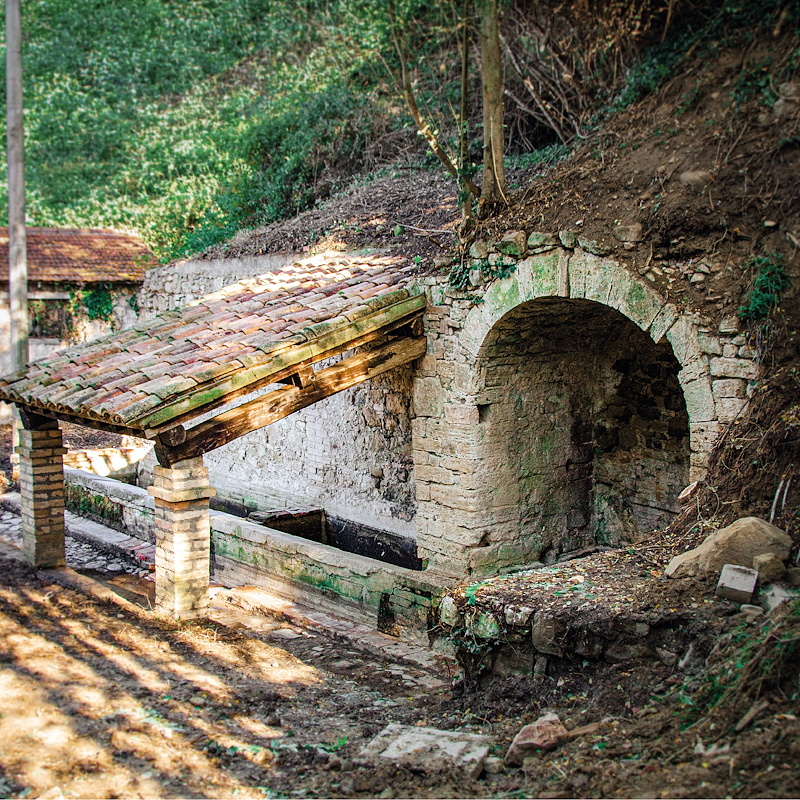
Conosciuta come “Fontana con corte” o “Fontana pubblica”, l’area rurale prendeva il nome microtoponomastico di Vocabolo Le Fontane.
Vediamo rivivere l’antica fonte attraverso le carte del nostro Archivio storico. Nel 1853 il Prefetto denunciava: “Igiene pubblica di questo Comune è trascuratissima… la fontana in pessime condizioni”. Fu Andrea Cruciani, deputato alla sanità comunale, insieme al segretario e a un testimone, che riempì un vaso con l’acqua e lo sigillò con cera lacca. Le analisi furono eseguite dal Professor Sebastiano Piergotti e… nessun pericolo, l’acqua risultò potabile e non nociva per la salute.
Posta fuori Collazzone e non molto distante dalla Porta Tuderte a servizio degli abitanti, aveva acqua perenne a sufficienza, una cannella permetteva di attingere l’acqua potabile, accanto una vasca per abbeveratoio e una per lavatoio. Risultando troppo piccolo il lavatoio per la popolazione del borgo, si decise di aggiungerne all’esistente un altro.
E a proposito delle riparazioni: “La fonte pubblica di Collazzone ha sempre dato un’acqua eccellente e abbondante” ma la vena ha incominciato a diminuire e “si crede utile riparare l’interno della conserva dell’acqua”. Anche il nuovo lavatoio necessitava di una piccola riparazione, per evitare che l’acqua di pioggia colando intorbidisse quella pulita della fonte. È dell’inizio del ‘900 la copertura per le due vasche del lavatoio, fu sopraelevato il muro esistente e vennero costruite 3 colonne in mattoni per sorreggere le travi del tetto, in tegole e coppi.
🔊 Ascolta la lettura audio:
▶ Guarda il video della testimonianza sulla fontana di Collazzone
English version
The fountain was known as ‘Fontana con corte’ or ‘Fontana pubblica’. The surrounding rural area was known by the local place name Vocabolo Le Fontane.
The old fountain comes to life through the records held in our historical archive.
In 1853, the Prefect reported that ‘public hygiene in this municipality is sorely neglected … the fountain is in a dreadful state’. Andrea Cruciani, the official responsible for municipal public health, filled a jar with water in the presence of the secretary and a witness. He then sealed it with sealing wax. Professor Sebastiano Piergotti tested the water and … there was no cause for alarm: it was fit to drink and posed no danger to health.
Situated outside Collazzone, not far from Porta Tuderte, the fountain provided local residents with enough water all year round. Drinking water was drawn from a spout. Beside it stood a drinking trough for animals and a basin for washing clothes. The washing basin was too small for the village, so it was decided to add a second one.
Repairs were also needed. ‘The public fountain of Collazzone has always supplied excellent water in abundance’, the records tell us. But the flow from the spring had begun to diminish, and ‘it is considered advisable to repair the interior of the water cistern’. The new washing basin also needed a minor repair to prevent rainwater running into it and clouding the clean spring water. The roof over the two washing basins dates from the early twentieth century. The existing wall was raised and three brick columns were built to support the beams of a roof covered with flat and curved terracotta tiles.
Piedicolle: la fonte ai piedi del borgo
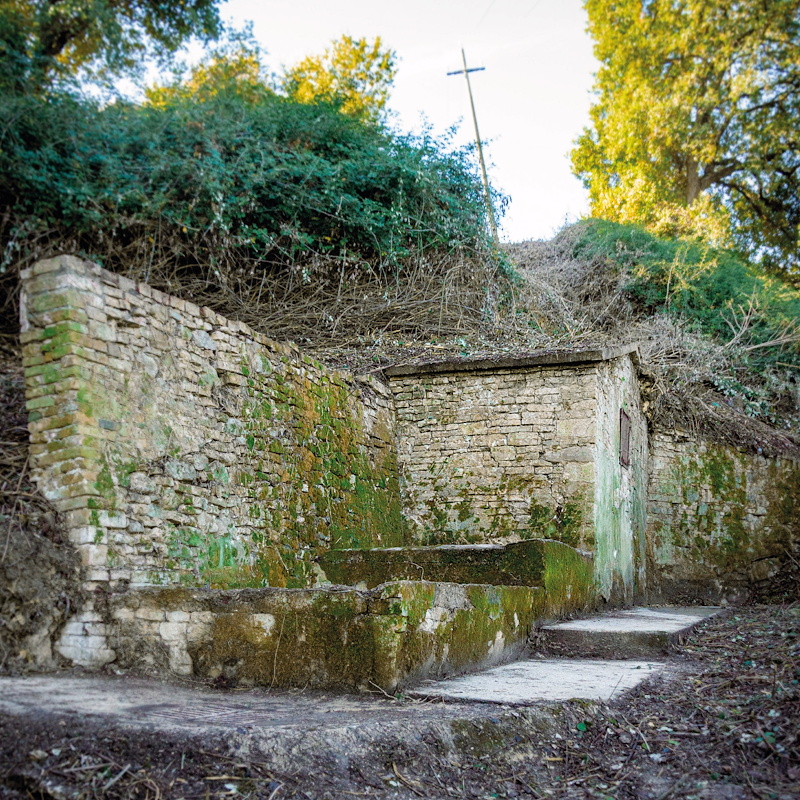
Alimentata dalle falde del crinale, la fonte era conosciuta come “Fontana Vecchia”, ed era storicamente collegata al borgo da un’antica strada vicinale.
Più volte nel XIX secolo si chiesero interventi urgenti di ripristino. Nel 1853 li chiese il Parroco del paese per il rifacimento sia della strada che della fontana, unica fonte pubblica che si trovava vicina al Castello di Piedicolle. L’acqua di detta fonte si era dispersa fuoriuscendo dalle condutture, danneggiando la strada e gli spazi circostanti e privando i “poveri popolani” del “più urgente alimento”.
La fonte comprendeva anche un lavatoio coperto con tettoia, un abbeveratoio coperto con volta e una “conservetta” dove scaricavano i tre divergenti condotti “ove erano allacciate le sorgive”. Nella perizia di quegli anni si dispone che i mattoni del parapetto dell’abbeveratoio siano da tagliare a ”sguincio” e da porre in pendenza nella parte interna per impedire che la vasca venisse utilizzata per lavare i panni e facilitare invece l’avvicinamento del bestiame; per l’acqua ad uso alimentare, si indicava invece l’aggiunta di “un cannello” per evitare che si immergessero i vasi direttamente nella vasca.
Del 1893 è un’altra perizia per la riparazione della fontana vecchia: gli abitanti di Piedicolle avevano rilevato un odore disgustoso “tale da renderla [l’acqua della fonte] inservibile ai bisogni domestici”. La causa fu identificata nella presenza di pioppi di almeno 15 anni che con le radici avevano danneggiato la conduttura. Si consigliarono quindi diversi interventi di ripulitura e ricostruzione, ma soprattutto si vietò che nelle vicinanze venissero fatti altri “piantamenti arborei”.
🔊 Ascolta la lettura audio:
▶ Guarda il video della testimonianza sulla fontana di Piedicolle
English version
Fed by groundwater within the ridge, the fountain was connected to the village by an old rural road.
Urgent repairs were requested several times during the nineteenth century. In 1853, the village parish priest called for both the road and the fountain to be restored. The fountain was the only public water source and stood some distance from the fortified village, Castello di Piedicolle. Water leaking from the pipes had damaged the road and surrounding ground, depriving the ‘poor villagers’ of their ‘most essential sustenance’.
The fountain also had a sheltered washing basin, a drinking trough beneath a vaulted roof and a small collecting cistern. Three pipes fed the cistern from different directions, ‘connected to the springs’. A surveyor’s report from the period specified that the bricks along the rim of the drinking trough should be bevelled and laid to slope inwards. This would prevent people from washing clothes in the trough and make it easier for livestock to reach the water. For drinking and cooking water, the report recommended adding ‘a small spout’ to stop people dipping their containers directly into the basin.
A further surveyor’s report, dated 1893, concerned repairs to the old fountain. The inhabitants of Piedicolle had noticed a foul smell ‘such as to render [the fountain water] unfit for domestic use’. The cause was traced to poplar trees at least fifteen years old, whose roots had damaged the pipework. Cleaning and rebuilding work was recommended. Above all, any further ‘planting of trees’ nearby was forbidden.
Collepepe
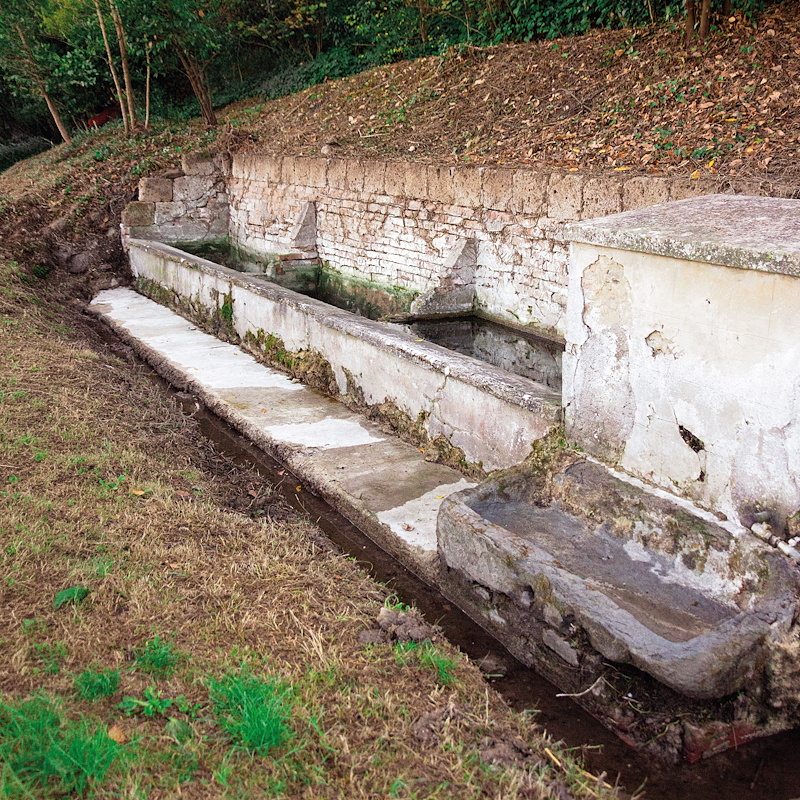
Denominata “Le Fontanelle” già in documenti datati 1891, era il punto di approvvigionamento di chi abitava fuori dal centro storico di Collepepe.
La fontana aveva tre vasche, la prima per l’acqua potabile, la seconda a uso lavatoio e la terza abbeveratoio per gli animali. Non erano coperte. Da un pozzetto veniva l’acqua per bere. Da un altro pozzetto scendeva l’acqua fino alle vasche.
Le donne, che arrivavano con “le canestre” sulla testa, utilizzavano la vasca soprattutto per il risciacquo del bucato; il lavaggio iniziava infatti nelle case, dove si utilizzava il “ranno”, un sapone naturale dalle straordinarie capacità sbiancanti, ottenuto facendo passare acqua bollente attraverso uno spesso strato di cenere di legna, filtrata da un telo di canapa o cotone grezzo.
La manutenzione della fontana era molto curata: si tagliava spesso la vegetazione circostante e le vasche venivano svuotate e pulite periodicamente. Potevano essere utilizzate a turno da tutti e l’inverno l’acqua non si gelava perché il getto dell’acqua era continuo.
In tempi più recenti, quando in tutte le case è arrivata l’acqua corrente, le fontanelle sono state utili per gli agricoltori e per il lavoro nei campi.
Evidente negli anni il valore sociale delle fontane, considerate dalla Comunità come una vera e propria piazza.
🔊 Ascolta la lettura audio:
▶ Guarda il video della testimonianza sulla fontana di Collepepe
English version
Known as ‘Le Fontanelle’ in documents dating back to 1891, the fountain supplied water to people living outside Collepepe’s historic centre.
The fountain had three uncovered basins: the first for drinking water, the second for washing clothes, and the third for animals to drink from. One small collection chamber supplied the drinking water; from another, water flowed down to the basins.
Women arrived with ‘le canestre’, baskets balanced on their heads, and used the washing basin mainly to rinse their laundry. The washing itself began at home with ‘ranno’, a natural wood-ash washing solution with remarkable whitening properties. To make it, boiling water was poured through a thick layer of wood ash and filtered through hemp or coarse cotton cloth.
The fountain was carefully maintained: the surrounding vegetation was regularly cut back, and the basins were emptied and cleaned at intervals. Everyone could use them in turn, and the continuous flow kept the water from freezing in winter.
In more recent times, after running water had reached every home, Le Fontanelle remained useful to farmers working in the fields.
Over the years, the fountains played a vital role in community life. Local people regarded them as a true piazza — a place to meet and come together.

Pagina aggiornata il 13/11/2026